Textile recycling moved in 2026 from pilots and slogans to real industrial investment: plants with capacities measured in tens of thousands of tonnes, partnerships worth tens of millions of dollars, and recycled yarns displayed alongside conventional ones at the world’s biggest yarn fairs. Here is what happened this year, and why it matters to anyone working in fashion design.
Yarn Expo Shanghai: Sustainability at the Heart of the Yarn Market
Yarn Expo Autumn 2026 took place at the National Exhibition and Convention Center in Shanghai from 25 to 27 August. In its closing report (18 September), organiser Messe Frankfurt said the fair drew around 600 exhibitors from 14 countries and regions and nearly 22,000 visitors from 110 markets. It ran alongside Intertextile Shanghai Apparel Fabrics and CHIC, linking fibre and yarn directly to fabric and finished garments.
Sustainability was no longer a side topic but a central one: 100% recycled polyester yarns, plant-based polyester, and regenerated polyester made from PET bottles and textile scrap, plus the “New Fibre New World” programme, one of whose themes was resource recycling and reuse. Bangladeshi garment maker MASCO said around 95% of its cotton yarn consumption now comes from certified, organic or recycled fibres.
Indorama Ventures and Jiaren: Tens of Millions for Chemical Recycling
The biggest investment move came from Thailand’s Indorama Ventures, one of the world’s largest PET producers and recyclers, which formed a joint venture with China’s Jiaren Chemical Recycling, a specialist in chemical polyester recycling. Indorama is backing the venture with a “double-digit million-dollar” equity investment in Jiaren’s capacity, aiming to unlock up to 100,000 tonnes a year of textile-recycled PET spinning capacity.
Jiaren currently operates around 30,000 tonnes of annual capacity and has added a second production base that raises its potential output to 150,000 tonnes. Its process sources, sorts and de-colours textile waste, then breaks the polymer down and rebuilds it, so the resulting yarn performs close to virgin, oil-based polyester. In Shanghai, Indorama showed its deja™ range made from 100% recycled PET.
Toray and The Lurex Company: Innovation Beyond Standard Polyester
Japan’s Toray Industries presented plant-based polyester and its NANODESIGN® technology, which controls the cross-section of a fibre at a very fine level so that a fabric’s hand, lustre and function can be engineered inside the fibre itself. The UK’s The Lurex Company showed its famous metallic yarns in fully recycled, traceable versions, an important step because shiny yarns have long been among the hardest components to make sustainable in eveningwear and knitwear.
Why Chemical Recycling Matters
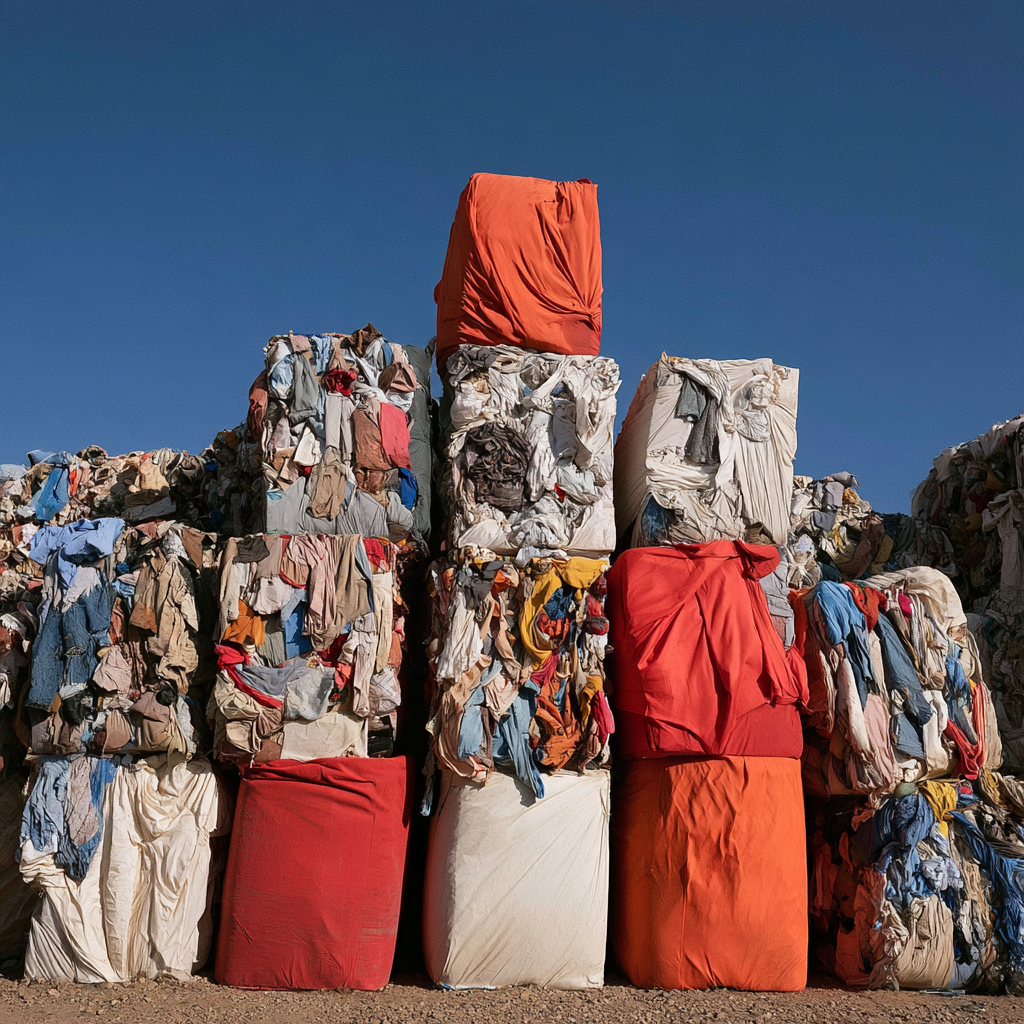
Mechanical recycling (shredding fabric and re-spinning it) shortens and weakens fibres with every cycle, so the output often ends up in lower-value uses such as fillings and insulation. Chemical recycling returns the polymer to its original building blocks, so an old shirt can in theory become new yarn of the same quality, known as “textile-to-textile” recycling. The biggest challenge remains blended fabrics (cotton with polyester and elastane), which are difficult and costly to separate.
What Future Designers Can Take From This
- Material choice is part of design: a designer who knows the difference between mechanically and chemically recycled polyester can ask suppliers for guaranteed performance.
- Design for recycling: reducing fibre blends within a single garment makes it much easier to recycle later.
- Certification and traceability: buyers at international fairs now ask about certificates and yarn origin, and speaking that language is a real professional advantage.
- Opportunities in luxury fabrics: recycled metallic yarns open the door to more sustainable eveningwear without giving up shine.
Conclusion
Textile recycling has become an industry in its own right, attracting major investment and international trade fairs. Recycling blended fabrics at scale is still a long way off, but designers who understand materials from fibre to finished garment will be best prepared for a fast-changing market. At Anna Stella Academy, understanding fabrics and materials is a foundation of every fashion designer’s journey.

About the author
Hanan Abo Hawas
Fashion designer and pattern maker with over 30 years of experience. Founder of Anna Stella Academy (annastella-academy.com), Anna Stella London, and the Arab Fashion Forum. Graduate of Istituto Burgo, Milan, with two years’ experience at Ferrari Fashion, Italy. Hanan developed the academy’s own teaching method, which builds on the designer’s psychology to shape creative, confident designers ready for the international stage.
“Inside every person is a creator — blessed is the one who brings them out.”